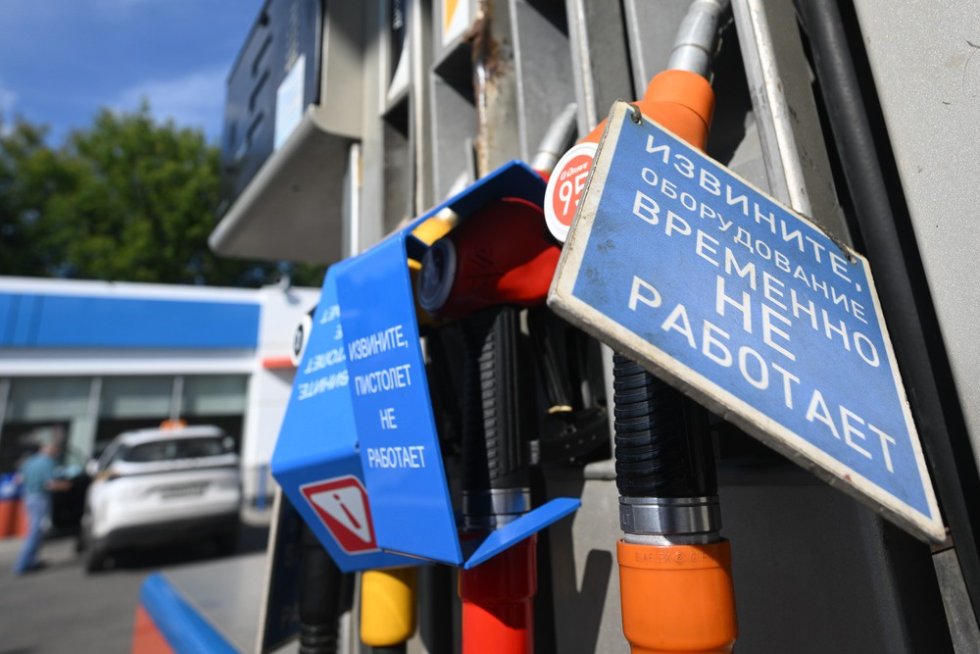
The situation may change dramatically in July. To increase fuel supply in the domestic market, the list of fuel producers eligible for subsidies from the budget has been expanded. Additionally, importers of petrol into Russia will also be able to receive these subsidies. However, an increase in tax revenues from the oil and gas sector is not expected. Quite the opposite, they are likely to decline.
Taxes are paid based on the results of the previous month; that is, in June, the taxes are for May, and in July, payments will be for June. The price of Russian oil, Urals, which is used for fiscal payment calculations, fell from 94.87 dollars per barrel in April to 86.52 dollars in May and then to 63.52 dollars in June. Taxes are paid in rubles according to the average exchange rate against the dollar for the month. The volume of oil production is also significant, but it has remained approximately stable since the beginning of the year, according to OPEC: 9.02 million barrels per day in April and 9.01 million barrels per day in May. June's statistics are not yet available, but production is likely to decline slightly further.
In June, revenue from the main sectoral tax on mineral extraction (MET) decreased by 45.6 billion rubles month-on-month. In July, a further decline is probable due to the decrease in the price of Russian oil in June, although this may be somewhat mitigated by a slight weakening of the ruble against the dollar (by 54 kopecks). Here, it becomes crucial to determine how significantly budget subsidies to oil producers can increase, which will also depend on oil and petroleum product prices, as well as the ruble exchange rate.
There are two types of payments in question: the previously mentioned reversed excise tax and the damping mechanism (compensation from the budget to oil producers for part of the difference between domestic fuel costs and export prices). Large oil-refining plants (ORPs) received these payments under the condition of signing investment agreements with the government regarding the modernisation of production, producing fuel of at least "Euro-5" quality, and fulfilling obligations to supply a specified quantity to the domestic market. The size of payments for the reversed excise tax is tied to the volumes of processed oil at these ORPs. The qualitative characteristics required for receiving the reversed excise tax and damping payments have now been lowered, allowing those who produce fuel by blending straight-run gasoline (the primary product of oil refining) with other components to qualify. As a result, this leads to an increased sulphur content in the gasoline and a reduced shelf life.
Additional budget payments are expected to stimulate oil producers to increase fuel output.As explained in a conversation with "RG" by Konstantin Simonov, Head of the National Energy Security Fund, this measure is intended to allow oil companies to quickly increase petrol output, albeit of lower quality, during a period of it being in short supply, without losing out on reversed excise tax payments. The expert emphasises that the requirements for modernising production have not been cancelled—this remains the ultimate goal for Russian ORPs.
To increase fuel supplies, importers of fuel will now also be able to receive the damping payments. This decision will prevent domestic petrol and diesel prices from escalating and will make such deliveries viable for intermediaries. Previously, damping payments could only be received by Russian and Belarusian ORPs. Now it applies to imported petrol: for fuel from EAEU countries, a coefficient of 0.9 has been established starting from June 1, 2026, and for supplies from other countries, a separate formula will be introduced based on import parity.
According to Daniel Tyun, CEO of "DA-Consulting," the budgetary impact could be noticeable but not catastrophic in the first month. If May's parameters are used, then each additional 100,000 tonnes of fuel that qualifies for support could cost the budget around 2.5-2.7 billion rubles. If it is possible to add 500,000 tonnes per month through blending and imports, that adds up to an additional burden of 12-14 billion rubles. Should the volume reach 1 million tonnes, this could translate into 25-30 billion rubles a month.
A similar opinion was voiced by Sergey Frolov, managing partner of NEFT Research, albeit with a caveat. He believes that payments to importers and oil depots (producing petrol through blending) will not significantly increase the revenue loss for the budget, provided these emergency measures do not last more than 3-4 months.
At the same time, as Simonov notes, excise payments are tied to the price of our oil, while the damping mechanism is linked to the export price of petroleum products; consequently, payments associated with both will decrease, albeit alongside oil and gas revenues. Overall, these payments will not pose a significant challenge to budget revenues. The key issue is ensuring that they serve as an incentive for oil companies to ramp up production, according to the expert.
According to Sergey Tereshkin, CEO of Open Oil Market, the amount of payments will be influenced by the current correction in the oil market, which is reflected in the dynamics of external prices for petroleum products. Therefore, damping payments for fuel producers are unlikely to exceed 200 billion rubles (210.6 billion rubles in June). As for payments to importers, comparatively low supply volumes will be a limiting factor.
Tyun believes that the measures taken can function without significant detriment to the treasury only as a short-term crisis scheme lasting a few months, while oil refineries are restored and seasonal fuel shortages are addressed. If Urals remains above 60-65 dollars per barrel, and if imports and blending remain targeted, the budget should withstand the additional 10-30 billion rubles in monthly payments. However, if oil prices drop below 55-60 dollars, and the ruble remains strong while damping payments exceed 200 billion rubles per month, the mechanism will quickly erode oil and gas revenues. The main risk is that the decisions taken currently address symptoms rather than the underlying cause. The actual problem is the decline in fuel output due to issues with oil refineries. In this context, the damping mechanism and the reversed excise tax may help maintain prices and stimulate supplies, but they do not replace the physical processing of oil, the expert emphasises.
Source: RG.RU