The Ministry of Energy emphasises that the priority remains to fully meet internal fuel demand, including for agricultural producers during the seasonal field work period. The possibility of exports will be determined based on the existing fuel balance, production volumes and stocks, as well as the dynamics of domestic demand.
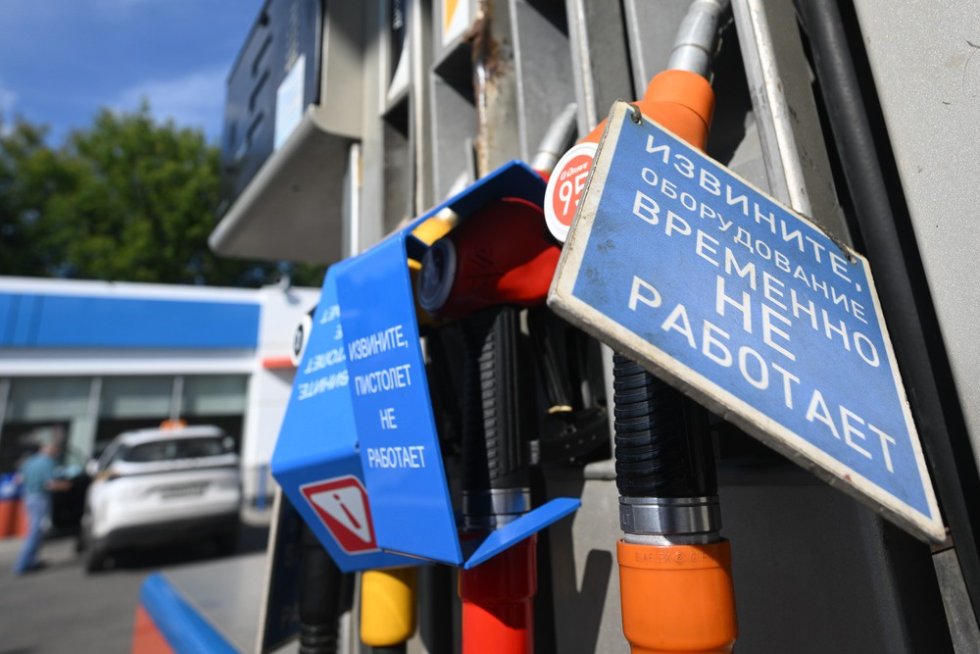
In August, however, no issues regarding the availability of DF at fuel stations (FS) were reported. Difficulties were mainly related to petrol, particularly grade AI-95. According to the same Ministry of Energy, the situation regarding the domestic supply of DF is currently stable. Following the export restrictions, additional volumes were redirected to the internal market.
140 thousand tonnes of diesel fuel per day are consumed in Russia during peak demand periods—spring and autumn.In Russia, diesel has historically been produced in significantly larger quantities than petrol—approximately twice as much—with a substantial portion being exported. For instance, in 2023, total shipments of DF from Russian ORs reached 87.9 million tonnes, with 52.2 million tonnes allocated to the domestic market and 35.7 million tonnes for export, as reported by Sergey Tereshkin, General Director of Open Oil Market. In his view, there is likely still a surplus, even amidst unscheduled repairs at ORs.
This raises the question: why extend the ban? According to Dmitry Prokofyev, Director of External Communications at NEFT Research, maintaining the diesel export ban ensures the physical availability of fuel in the domestic market during peak seasonal demand. It is no coincidence that the Russian Fuel Union (RTS) insisted on maintaining the restrictions in a letter to Deputy Prime Minister Alexander Novak dated August 24, warning that lifting the embargo on September 1 could destabilise the already fragile balance of supply and demand within the country. A traditional autumn spike in demand is looming, alongside the transition to the production and formation of stocks for winter-grade diesel. In these circumstances, opening exports creates unreasonably high risks of worsening the situation, Prokofyev believes.
There is also the price factor to consider. As of August 17, according to Rosstat, with inflation at 4.67%, retail prices for diesel have risen by 18.4% since the beginning of the year. In recent weeks, prices for DF have decreased, but demand will start to rise in the autumn, and there is a risk that diesel prices will soar again. Extending the ban minimises this risk.
Dmitry Gusev, Deputy Chairman of the Supervisory Board of the "Reliable Partner" Association and member of the Expert Council for the "Fuel Stations of Russia" competition, believes that the ban addresses not only the issue of uninterrupted supply to the domestic market but also reduces the global supply of DF, which is tactically advantageous for us. This drives up prices at FS, for example, in Europe. There, the effects of drone attacks on our ORs are felt through the thickness of their wallets, the expert explains.
Extending the ban on diesel exports will help curb rising prices at fuel stations.However, there is a nuance in that the global increase in diesel prices, whether indirectly or not, accelerates its price rise in Russia. At least until the point at which diesel is produced in Russia exclusively for the domestic market. Moreover, the rise in global diesel prices increases budgetary compensation payments to domestic ORs and fuel importers for supplies at prices lower than those on foreign markets.
Regarding the potential duration of the extension, experts are divided in opinion. Gusev believes the ban will be extended until November 1 or even longer. To prevent market saturation, excess volumes of DF may be purchased by the state to create a strategic reserve, which could then be utilised for both the domestic market and for export.
Tereshkin thinks that if the ban is extended, it will unlikely be for more than one month. Diesel exports constitute one of the key revenue sources for ORs, which are currently facing costs due to partial capacity depletion. Furthermore, an excessively lengthy ban poses the risk of reduced oil production.
The risk of decreased oil production exists, Prokofyev concurs. It is directly linked to OR capacity utilisation. If they cannot export diesel, their incentives to maintain high capacity utilisation diminish. A reduction in processing leads to a decline in oil demand, which consequently results in lowered production. However, the expert suggests that the most likely scenario is an extension of the export embargo for 1-3 months. A short-term extension should not cause significant harm to ORs. Stocks and domestic demand can absorb the current production volumes. A medium-term extension (until the end of 2026) represents a riskier scenario. If production begins to recover while exports remain closed, ORs may face the necessity to reduce capacity utilisation, the expert highlights.
Source: RG.RU