Deputy Prime Minister Alexander Novak has instructed relevant agencies to examine a number of issues to stabilise the domestic fuel market. In particular, they are to hold consultations with Belarus on increasing petrol supplies to Russia. This was reported to RBC by two sources familiar with the content of the instructions.
Furthermore, the authorities are discussing the possibility of increasing payments under the import damping mechanism, including on Belarusian fuel. According to one of RBC's interlocutors, it is not ruled out that corresponding changes to the Tax Code may be introduced retrospectively – from 1 June 2026.
The mechanism for receiving damping payments when Russian oil is processed abroad and the resulting fuel is subsequently imported into Russia was enshrined in law in November 2025. The damping mechanism compensates oil companies for the difference between the profitability of exporting fuel and selling it on the domestic market. The adopted law, among other things, made toll processing of Russian oil abroad economically comparable with processing within the country.
Additionally, Novak instructed the Ministry of Energy and the Ministry of Finance to examine the extension until 30 June 2027 of the zero rate of import customs duty on petrol. Another measure to support the domestic market, according to sources, could be a change in the tax regime for certain types of fuel. In particular, the authorities plan to zero the excise duty on AI-95 petrol produced by blending AI-92 petrol with octane-boosting additives at oil depots.
At the same time, the government intends to tighten control over the export of petroleum products. The relevant agencies have been instructed to prepare draft resolutions imposing a complete ban on petrol exports for two months, including supplies under certain intergovernmental agreements. Thus, restrictions may also apply to countries that were previously exempt from the export embargo.
In addition, the possibility of introducing a complete ban on the export of diesel fuel is being discussed, with the exception of supplies under intergovernmental agreements. However, the proposed duration of such restrictions has not yet been determined.
On current export bans
In Russia, a ban on petrol exports has been in effect since 1 April and runs until 31 July. The embargo applies both to refineries with an annual production capacity of more than 1 million tonnes of petroleum products and to traders. The ban was introduced to prevent shortages ahead of the high-demand season, which traditionally falls in spring and summer, as well as during the period of active agricultural work.
In addition, a temporary ban on diesel fuel exports remains in place, but only for non-producers – traders, oil depots and refineries with small production capacity. Also on 1 June, the government introduced a temporary embargo on the export of aviation kerosene, effective until 30 November 2026.
While restrictions on petrol and diesel exports have been imposed repeatedly since September 2023 to stabilise the domestic market, this is the first time that supplies of aviation kerosene abroad have been banned. Traditionally, restrictions have not applied to export volumes under intergovernmental agreements.
In parallel, the authorities are discussing a temporary ban on transit shipments of petrol through Russian territory with the aim of redirecting additional volumes of fuel to Russian consumers, sources say.
RBC has sought comment from Novak's office, as well as from the press services of the Ministry of Energy and the Ministry of Finance.
Why the market needs additional volumes
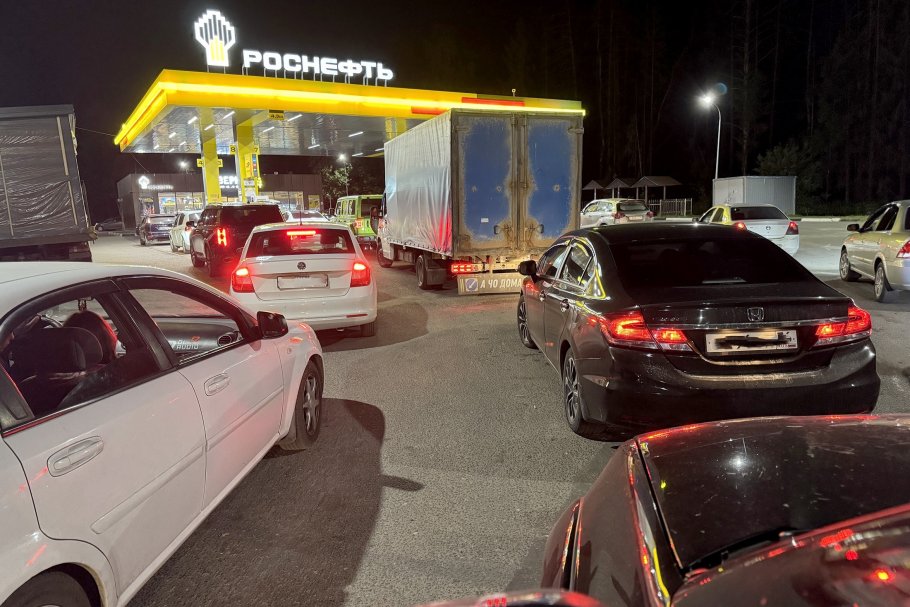
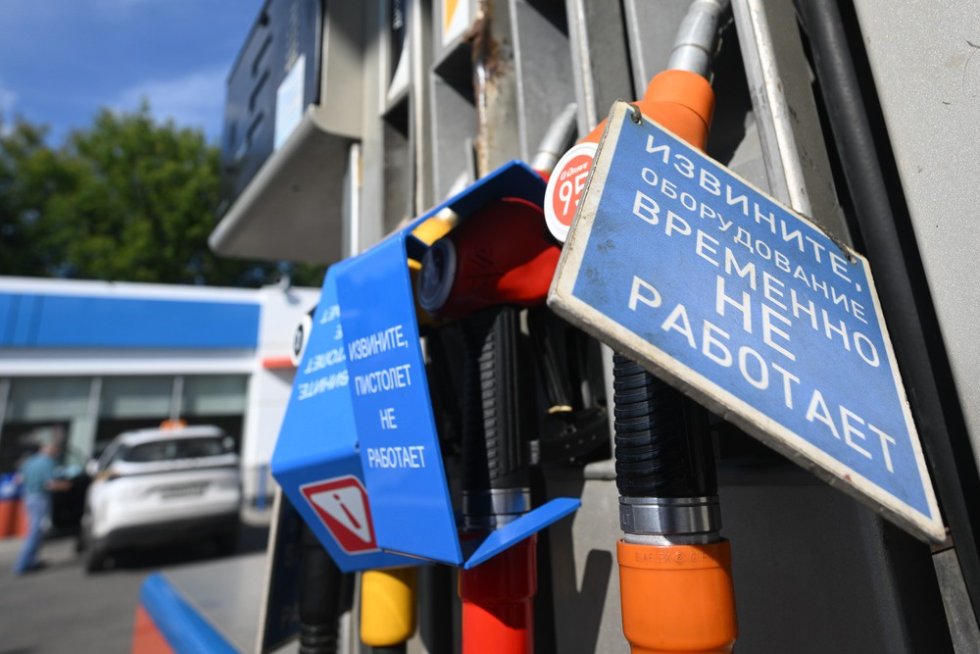
An RBC source in the fuel market links the preparation of additional measures to saturate the country with fuel to declining inventories and reduced supply on exchange trading. The Ministry of Energy has withheld data on petroleum product processing volumes since 2023; the ministry explained the closure of the statistics as necessary to ensure the information security of the petroleum products market in the context of the "existing geopolitical situation".
According to the interlocutor, the average sales volume of AI-92 petrol on the St. Petersburg Exchange from 25 to 29 May was 17,088 tonnes, which is 26% lower than the average value since the beginning of the year of 23,000 tonnes per trading session. The figure for AI-95 grade over the past seven-day period was 9,072 tonnes – 43% below the average since the start of the year. This could have occurred against the backdrop of reduced utilisation or temporary shutdowns of a number of refineries following drone attacks.
Exchange sales of diesel fuel, the production of which in Russia is considered to be in surplus and on average can account for up to 70% of total output, have also declined. According to RBC's source, the average sales volume over the stated period was 48,707 tonnes, almost 17% below the average since the start of the year (58,500 tonnes). He links the reduction in exchange sales of diesel fuel to the desire of oil companies to profit from exports amid high global energy prices during the Hormuz crisis.
According to estimates by Platts (available to RBC), any export restrictions on Russian diesel fuel would lead to a tightening of the global market, given that Russia accounts for roughly 40% of global diesel fuel exports. In May, Russian oil producers shipped 1.182 million tonnes of diesel fuel or gasoil to the Mediterranean region. This constitutes 37.3% of total imports into those countries.
How imports from Belarus are arranged
Supplies of Belarusian fuel to Russia are carried out primarily through the St. Petersburg Exchange. Belarusian refineries sell petrol and diesel fuel to the state trader Promsyrieimport, which then sells these volumes on the exchange at domestic Russian prices. The difference between the purchase cost of the fuel and the price of its sale on the domestic market is compensated through damping payments from the budget.
RBC has sent a request to the press service of the St. Petersburg Exchange.
Sergei Tereshkin, General Director of Open Oil Market, noted that the damping mechanism on petrol and diesel for Belarusian refineries is calculated according to the same rules as for Russian refineries, but only provided that these plants supply fuel through the St. Petersburg Exchange. "Even if all Belarusian petrol were to enter the Russian market, it would cover less than 10% of Russia's needs," the expert says. The production of motor petrol in Belarus is just over 3 million tonnes per year, while demand from Russian car owners is almost 40 million tonnes. Tereshkin added that Belstat does not provide a breakdown by petrol grade, and the latest data available is for 2020.
However, the exchange is not the only sales channel for Belarusian fuel in Russia. Significant volumes of petroleum products are also supplied under direct contracts with Russian oil companies.
Supplies of Belarusian fuel to Russia are intermittent in nature. Earlier, the National Price Exchange Agency explained to RBC that the sales volumes of petroleum products from Belarusian refineries are volatile and depend on the supply-demand balance at key production hubs in Russia, weather conditions, and production volumes.
Source: RBC