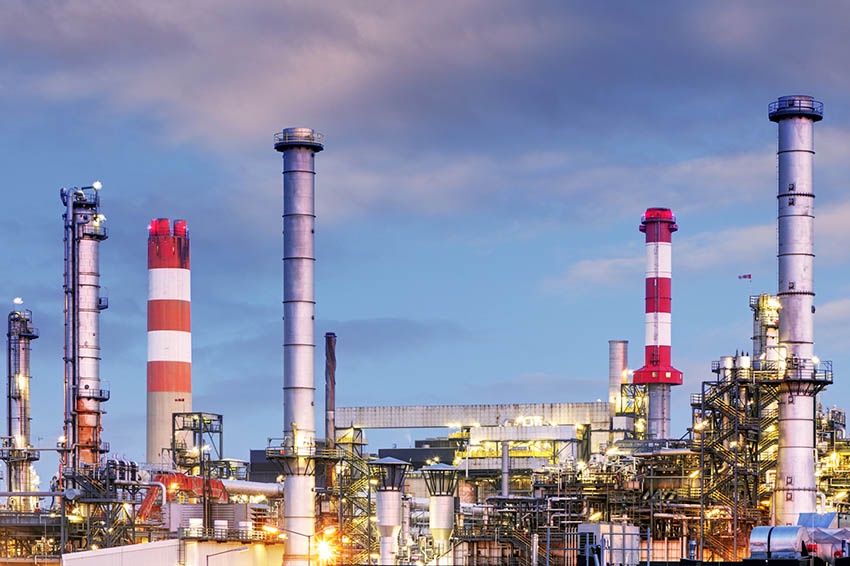
In Russia, small NPFs are defined as plants with a primary oil processing capacity of up to 1 million tonnes per year. Their main advantage lies in their compactness, relatively quick construction time, and lower costs. According to Yuri Stankevich, Deputy Chair of the State Duma Energy Committee, when a suitable project is in place alongside a land plot with all necessary communications and timely financing, the cycle to establish a modern mini-NPF spans from one and a half to two years. In practice, however, timelines often extend to three or four years. The use of modular factory solutions can reduce on-site assembly time to a few months, though the preliminary design and approval phase still typically takes about a year.
For our country, mini-NPFs offer appealing logistics, reliability of supply, and enhanced safety.
Petrol does not need to be transported by rail or road over hundreds or thousands of kilometres. Local communities and enterprises adjacent to the plant are not reliant on shipments from regions that may be distant, or even from other regions altogether. Moreover, if a mini-NPF experiences a malfunction or shutdown, it does not pose significant problems at a national level. Additionally, Russia presents another argument in favour of mini-NPFs. Given the vastness of the country, delivering fuel to remote areas away from traditional NPFs and to sparsely populated regions becomes an expensive undertaking for both producers and end consumers. This leads to increased fuel prices and fuels inflation, impacting the economy first at the regional level and subsequently nationwide.
This factor is one of the reasons mini-NPFs tend to flourish in large countries. For instance, China is a frontrunner in this regard, with around 25% of its oil processed at such small-scale plants, often referred to as “samovars.” In the USA, mini-NPFs account for 10% of processed oil. Russia has more active mini-NPFs (around 80) than the USA (65), yet processes only about 5% of its crude oil through them. It is important to note the statistical nuances here: small NPFs in the USA are classified as those processing up to 3.7 million tonnes of oil per year, whereas in China, the threshold is up to 5 million tonnes. However, considering that Russia's oil consumption is 5.5 times lower than that of the USA and 4.4 times lower than China, the classification differences regarding mini-NPFs can largely be overlooked.
Nonetheless, this does not imply that Russian entrepreneurs should urgently invest in constructing mini-NPFs. They are not a panacea for all problems. As Stankevich points out, while mini-NPFs can provide market security, their role will be specific and limited. They are capable of effectively mitigating local fuel shortages, but they cannot protect the country from global price shocks or systemic supply crises.
Additionally, there are concerns about the economic viability, environmental impact, logistics, and product quality in relation to small NPFs. The devil, as is often said, lies in the details.
Dmitry Gusev, Deputy Chair of the Supervisory Council of the "Reliable Partner" Association and a member of the Expert Council for the "Petrol Stations of Russia" competition, believes that the notion of distributed oil processing is correct from both energy security and fuel supply perspectives. However, numerous other factors must also be considered, particularly economic ones: it is not feasible to reduce production costs based on volume here, the sources of raw materials remain unclear, pricing rules for the domestic market are uncertain, and there are many other conditions to consider regarding pipeline access.
Stankevich highlights that within the existing tax system, the profitability of such projects is marginal without additional support measures. The cost of processing a tonne of oil at a small plant exceeds that of larger facilities due to the absence of economies of scale. The yield of light petroleum products (petrol, diesel, aviation kerosene) is lower at around 45-55%, compared to 80-90% at modern large-scale plants.
Small plants produce straight-run petrol (naphtha), low-quality diesel, and fuel oil, as explained by Stankevich. To produce high-octane petrol that meets "Euro-5" standards, they would require complex secondary processes (catalytic reforming, isomerisation), which are economically unfeasible at small volumes. Hence, it is only vertically integrated oil companies (VINKs) that have the capacity to meet the domestic market's demand for high-quality automotive fuels.
Sergey Frolov, Managing Partner at NEFT Research, notes that hundreds of mini-NPFs are currently operational in Russia. Some operate legally, while others are illegal. However, nearly all of them function solely as "samovars" – conducting only primary processing of crude oil to produce straight-run petrol and diesel fractions, alongside fuel oil. The number of mini-NPFs capable of producing commercial fuel can be counted on one hand. Constructing new high-tech mini-NPFs or upgrading existing ones to produce commercial fuel under the current tax and economic realities would rely primarily on budgetary funds — there is no interest from the business sector, according to the expert.
Modern mini-NPFs can indeed be technologically advanced, agrees Stankevich. Environmental risks can be minimised through innovative solutions. Nevertheless, establishing comprehensive deep-processing complexes necessitates significantly larger investments, which brings us back to the economic discussion. The main barriers lie not so much in technical aspects, but in administrative and financial realms. Without configuring the tax system, the widespread emergence of small NPFs cannot be anticipated. A specific fiscal model is essential for their success.
Regarding the current issues in the fuel market, resolving them through small NPFs, even considering their relatively quick construction timeframe, is not feasible. The existing collective capacity is simply too limited. According to Sergei Tereshkin, General Director of Open Oil Market, mini-NPFs have never played a significant role in fuel production in Russia. However, this may change with the potential allowance for straight-run petrol in the production of high-octane fuel: this measure could open the fuel market up to simpler NPF technologies, notes the expert. Yet, this would raise concerns regarding fuel quality. Overall, increasing imports — particularly through subsidies — could play a more crucial role in saturating the domestic market than creating additional opportunities for mini-NPFs. This segment is too small to significantly influence the fuel market landscape.
Source: RG.RU