The intense struggle of Russian authorities against the fuel crisis has been ongoing for several months now. On 2nd April 2026, ahead of the seasonal price increase for fuel, the government implemented a complete ban on petrol exports until the end of July, with the exception of supplies under intergovernmental agreements. The decision was justified by a rise in world oil and petroleum product prices due to the conflict in the Persian Gulf. This measure temporarily managed to slow down the price increase for a time. By 2nd April, the price of AI-92 petrol had dropped by 4.8% from a peak of 68,504 roubles recorded on 24th March, to 65,196 roubles, while the price of AI-95 decreased by 3.4% to 70,031 roubles compared to the maximum of 24th March at 77,483 roubles.
The effect of the export ban did not last long. Supply decreased due to drone attacks on refineries. By May, according to Rosstat, which does not provide absolute figures on production, the output of petroleum products fell by 13.5% month-on-month. Producer prices for AI-92 increased in May by 0.8% compared to April and 13.2% compared to May 2025. AI-95 petrol also saw a price rise of 0.8% from the previous month and 12.7% year-on-year.
In retail, the weekly increase in the price per litre of AI-92 accelerated. From 27th April to 4th May, the price rose from 63.53 roubles to 63.59 roubles, and from 26th May to 1st June, it grew to 0.4%, reaching 64.17 roubles. The cost of AI-95 also increased: from 0.1% between late April and 4th May (from 68.99 roubles per litre to 69.01 roubles) to 0.5% from 26th May to 1st June (from 69.46 roubles per litre to 69.78 roubles).
Over the week from 16th to 22nd June, the price of AI-92 rose by 3.2%, from 65.41 roubles to 67.54 roubles, while AI-95 increased by 2.9%, from 71.11 to 73.2 roubles. However, during the week from 23rd to 29th June, the rate of increase slowed, with retail prices for AI-92 growing by 1.7%, to 68.76 roubles per litre, and for AI-95 by 1.6%, to 74.38 roubles per litre.
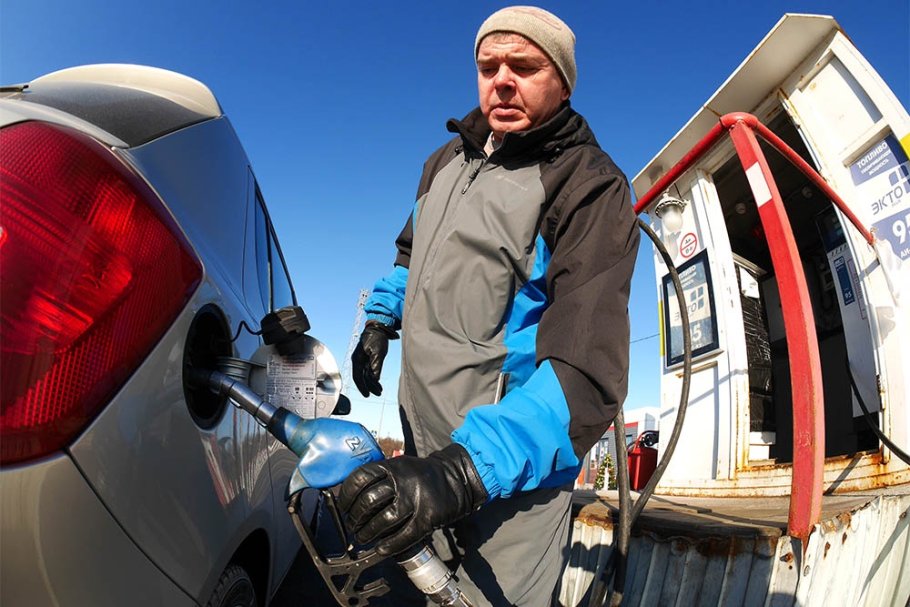
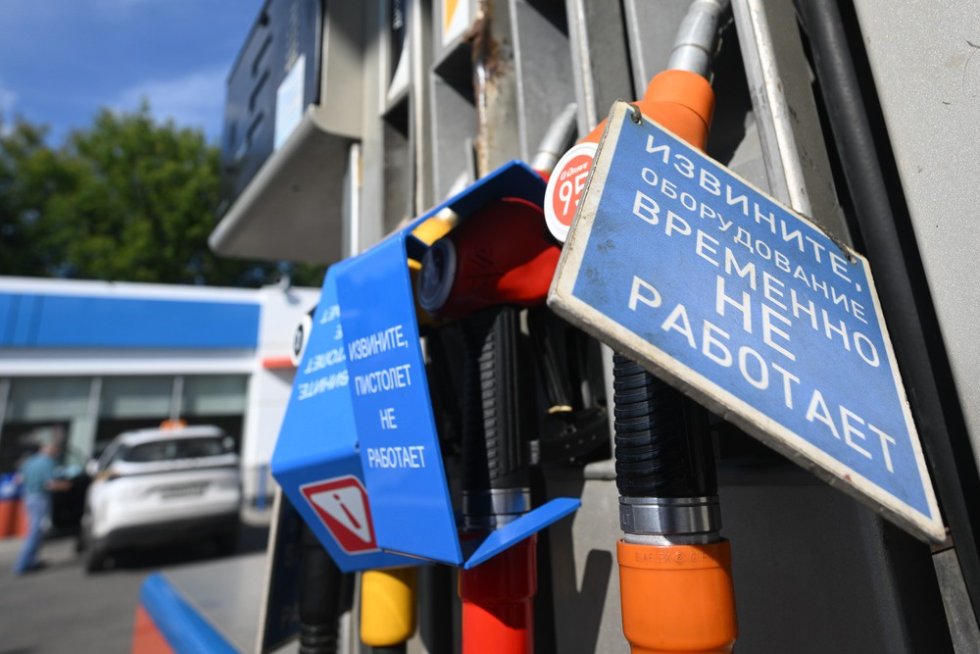
The reason for the price increases was a deficit of petrol and diesel that emerged in many regions of Russia at the end of May. Long queues formed at petrol stations, and local authorities across the country began to limit fuel sales at filling stations. On 28th June, President Vladimir Putin publicly acknowledged the fuel shortage, describing it as "non-critical".
Lower Quality Petrol
On 8th July, the government imposed a ban on diesel fuel exports, as announced by Deputy Prime Minister Alexander Novak during a meeting with Putin and members of the government regarding the fuel market situation. Novak indicated that in July Russia will begin importing petroleum products and that the government has postponed a number of refinery repairs to later dates.
Previously, on 24th June, the State Duma approved a bill containing amendments to the Tax Code in final reading. The resolution included a comprehensive package of measures aimed at combating the fuel deficit. On 4th July, the law was signed by Vladimir Putin.
The legislative proposal allows producers to mix straight-run gasoline (naphtha) with other components to produce high-octane fuel. The petrol produced in this manner meeting Euro-3 standards is equated to the high-quality Euro-5, and those who produce it will be eligible for benefits at the same level as other suppliers, despite its sulfur content being 15 times higher than that of Euro-5—150 mg per kilogram of fuel.
On 2nd July, Prime Minister Mikhail Mishustin signed a resolution allowing refineries and oil depots to produce Euro-3 class petrol and diesel for the domestic market until the end of 2026.
Small refineries may benefit from the reduced environmental class of petrol, says Sergey Selin, director of market analytics at Siala. He explains that sulfur is removed from petroleum products using hydrocracking units that are present at large refineries, as significant volumes are needed for their operation: from hundreds of thousands to over a million tonnes of petrol annually. Such units are absent in small refineries in northern Russia and even in larger ones in the south that were constructed decades ago. They can only produce Euro-3. "The equipment runs well on it," says Selin.
Maxim Shevyrenkov, head of the Raw Materials Market Analysis Centre at the Institute for Energy and Finance (IEF), believes that the reduction in petrol's environmental standards, combined with limitations on fuel sales at filling stations, will be an effective measure to alleviate the deficit, especially in regions with relatively small fuel storage capacities. The negative environmental impact of using such fuel will be relatively unnoticeable, he argues.
A simple adjustment of manufacturing processes at refineries allows for increased production of Euro-3 petrol, notes Stanislav Mitrakovich, an expert from the Financial University and the National Energy Security Fund. "This fuel is of subpar quality, not particularly beneficial for ecology or modern engines, but it works quite adequately overall," he states.
It is likely that the majority of Euro-3 petrol will be sold in production areas—northern Russia and Krasnodar Krai, claims Selin from Siala. He notes that this is not about substantial volumes, and during peak consumption seasons, this petrol may not suffice for other regions, adding that the release of such fuel is not a panacea, but merely a temporary solution to alleviate the deficit. Many engines currently in use were designed with Euro-3 in mind, so it likely won't cause damage to them, the expert adds.
However, service stations are already seeing an increase in damaged vehicles. The number of inquiries in June alone increased by approximately 10-15%, reported Forbes co-owner of the VR Auto service centre aggregator, Mikhail Kozhanov. He states that all categories of motorists are affected, from owners of luxury brands to those with domestic and Chinese makes. "Most modern vehicles are adapted to Euro-5 fuel, but in reality, they are increasingly filled with Euro-4 or Euro-3, leading to failures in engine components, filters, spark plugs, and injectors. There is a problem; the number of inquiries is growing and will only increase, as not all vehicles react immediately. Disruptions in fuel injection systems can manifest after several poor-quality refills," Kozhanov explains.
Support for Refineries
Authorising the production of Euro-3 will help partially address the deficit issue and assist smaller producers in ramping up fuel production. Major enterprises have not been overlooked. The agreements for the reconstruction of refinery capacities have been extended until 31st December. This pertains to those plants that entered into modernisation contracts with the Ministry of Energy before 1st June 2019 for amounts of at least 60 billion roubles and were expected to launch new capacities by 1st January 2026 but have not yet managed to do so.
Back in 2019, the Ministry of Energy entered into a series of agreements with major oil companies, granting them the right to refund excise taxes on crude oil upon meeting one of two conditions: either the share of 5th class petrol must be at least 10% of the processing volume, or investments in modernisation exceed 60 billion roubles from 1st July 2014 to 1st January 2026. The new law increases the minimum investment threshold for modernisation from 60 billion to 100 billion roubles.
Oil companies entering into modernisation agreements with the Ministry of Energy receive a tax deduction on crude oil, known as the "reverse excise", explains Sergey Tereshkin, CEO of the Open Oil Market marketplace. Essentially, this is a subsidy calculated using a complex formula based on the volume of processed raw materials. Since 2021, an investment supplement—30% of the reverse excise—has been added to this. However, until now, only those companies that invested in new refining installations of at least 60 billion roubles could benefit from it, the expert clarifies. Now, this threshold has been raised to 100 billion roubles. It is possible that recovery costs for technological units that have been recently subjected to unscheduled repairs will also be included in this figure, says Tereshkin.
Largest refineries usually fall under vertically integrated oil companies (VIOC), as noted by Tereshkin. In 2025, these refineries received 2.39 trillion roubles, almost 1.3 trillion roubles of which accounted for the reverse excise and 170 billion roubles for the investment supplement, he mentions.
Importers Have Not Been Forgotten
Another measure for overcoming the deficit has been imports. On 1st July, Reuters, estimating summer petrol consumption in Russia at 110,000 tonnes per day, reported that at least 60,000 tonnes of petrol have already been shipped from India to Russia. Kazakhstan, according to the agency, has agreed to supply 50,000 tonnes of petrol to Russia in July and August. Additionally, Reuters reported that Moscow plans to import 400,000 tonnes of petrol monthly from various countries, including Belarus, which, according to agency estimates, has tripled its supplies to Russia in the first half of June to 70,000 tonnes compared to the same period in May.
To stimulate imports, the new law has made damper payments available for the first time to companies selling foreign-produced fuel within Russia. The government will determine the list of sellers.
The damper mechanism compensates for the price difference in fuel between domestic and overseas markets for producers and importers. If the export price of fuel is higher than the internal price and exporting becomes more profitable than supplying to the domestic market, the government compensates producers for the difference; if negative, companies have to pay into the budget. For importers, authorities compensate the difference between external prices and domestic market prices.
The damper for producers is calculated based on the difference between the actual external and fixed internal prices. This year, the fixed internal threshold for AI-92 petrol is set at 62,300 roubles per tonne, while it is 58,950 roubles for diesel. This same threshold will apply to importers, with the difference that the actual prices in the EAEU will be used as the external indicator, explains Tereshkin from Open Oil Market.
For petrol produced in other countries, according to the law, the damper payment size will be determined by the Federal Antimonopoly Service (FAS) based on the indicative price of AI-92 petrol in India and its delivery costs to Russia. According to Tereshkin, petrol prices in the Indian market will certainly not be lower than in Russia, considering that global prices have yet to return to levels seen in February 2026. According to FAS, the average price for the export alternative for AI-92 petrol rose from 57,976 roubles per tonne in February to 98,897 roubles per tonne in May 2026. This figure is calculated based on European prices, Tereshkin warns; however, when assessing prices in Asia, the situation is unlikely to change significantly.
For fuel importers from the Eurasian Economic Union (EAEU) which includes Belarus, Kazakhstan, Kyrgyzstan, and Armenia in addition to Russia, the compensation coefficient for the quantity of imported fuel is higher than for Russian producers: 0.9 compared to 0.68. Furthermore, these payments will be applied retroactively from 1st June 2026. From this date, the volumes of petrol imported from Belarus and Kazakhstan for calculations will be multiplied by 0.9, meaning the higher the import volume, the larger the size of damper payments, Tereshkin from Open Oil Market clarifies.
From the Exchange to Filling Stations
Another measure adopted by the government has been the reduction of the mandatory sales norm for petrol producers on exchange markets from 15% to 10% of production volumes. This regulation will be in effect from 1st July through 30th September 2026.
Reducing the norms, according to Shevyrenkov from IEF, will allow large oil companies to utilize fuel that was not sold on the exchange at their filling stations.
Since the VIOCs do not have enough petrol to supply their networks, a decision has been made to sacrifice some independent petrol stations that acquired fuel on the exchange, adds Selin.
Tereshkin from Open Oil Market believes that reducing exchange sale norms is the wrong decision. He argues that this will make petrol and diesel less accessible for independent petrol stations, including in regions where there are not enough major company filling stations.
The FAS has also stepped in to tackle fuel issues, announcing on 6th July that its Moscow regional office had launched investigations against six independent market participants who simultaneously raised petrol and diesel prices at their filling stations, while the Orenburg office initiated similar cases against three independent fuel market participants.
All Too Late
As of now, the implemented measures have not yielded results. According to the latest data from Rosstat, between 29th June and 6th July, the price increase for petrol accelerated. AI-92 rose by 2% from the previous week to 70.21 roubles per litre, AI-95 increased by 2.3% to 76.19 roubles per litre, and diesel fuel rose by 3.4% to 87.76 roubles.
This time, Rosstat did not specify which region experienced the highest price hikes. Last week, it was Sevastopol, where petrol prices surged by 30%. However, regarding the sharp increase to 197 roubles per litre for AI-95 in the city, the head of Sevastopol, Mikhail Razvozhayev, told Putin on 8th July.
Stimulating fuel imports should have been initiated a few months earlier when the risk of unscheduled repairs at refineries was already evident, believes Tereshkin from Open Oil Market. This would have helped to avoid the emergence of queues at filling stations, he states.
Given the current market situation, it may now be an opportune moment to transition to free pricing on the St. Petersburg Exchange and at filling stations, and to eliminate the damper, suggests Selin from Siala. This would stimulate commercial fuel imports and rapidly address the supply deficit in the domestic market, he believes.
However, Shevyrenkov from IEF contends that the best method of combating the surging demand for fuel would be to impose restrictions across all filling stations in the country.Source: Forbes