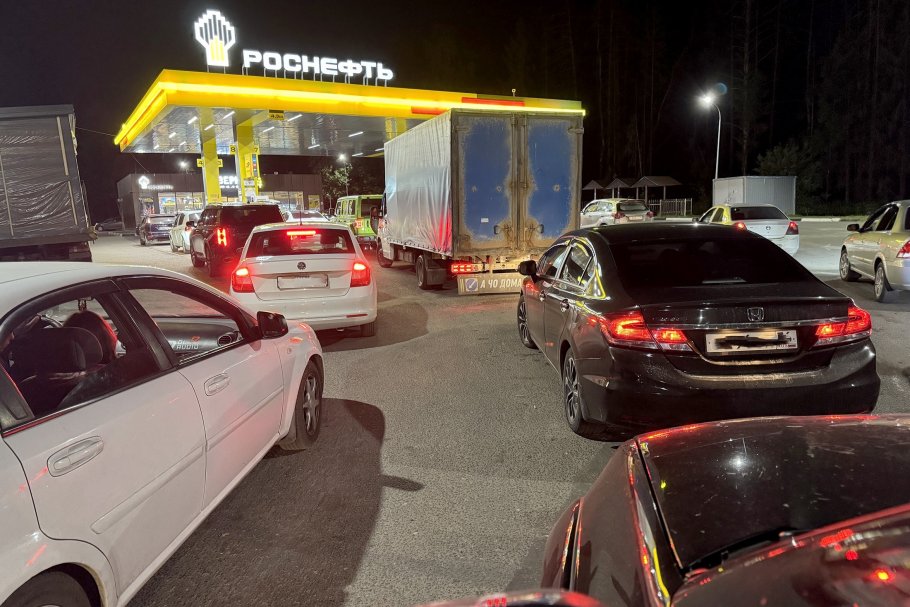
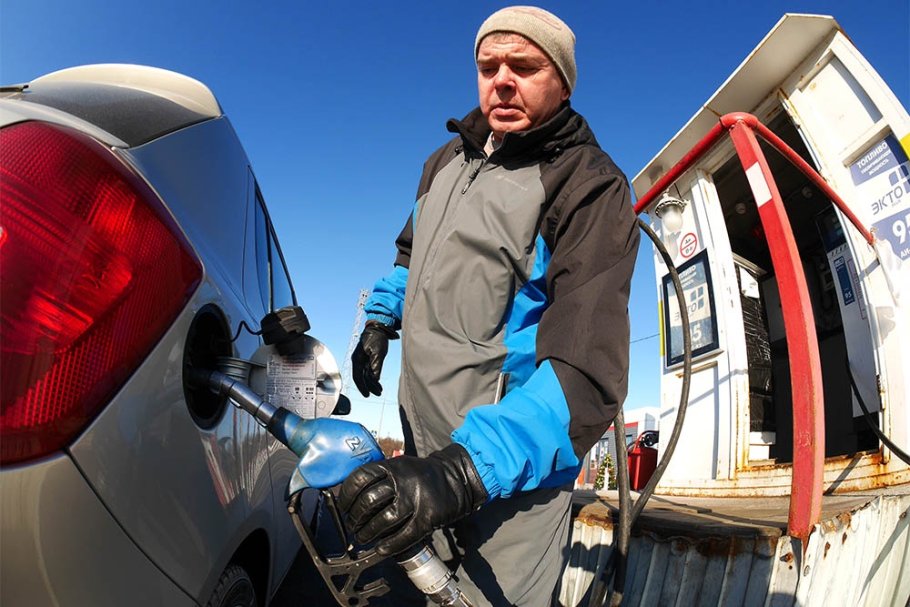
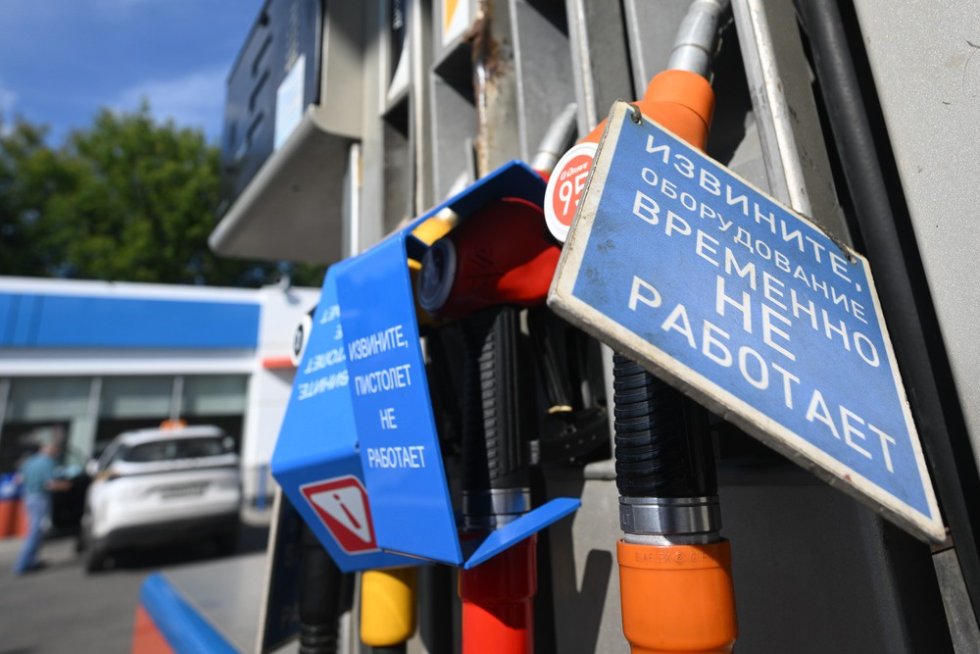
However, the increase in stock prices cannot fail to impact the fuel prices at petrol stations altogether. Fuel is purchased by stations through the exchange or at oil depots. Major networks, owned by large oil companies, may source fuel directly from refineries; however, even they do not always operate in this manner. Since the beginning of the year, retail prices have increased by only 2.4% for gasoline and 1.6% for diesel, which is below the country's average inflation rate of 2.59%. It is worth noting that since early March, the price growth for gasoline has noticeably accelerated.
Meanwhile, against the backdrop of the Middle Eastern crisis, news continues to flow in regarding sharp fuel price hikes abroad. In particular, prices in the United States have risen by 35%, with retail prices increasing more significantly than wholesale prices.
Fuel prices have also risen in European countries and China, which is not surprising, as they are oil importers and current prices do not seem inclined to fall below $95 per barrel. More concerning is the fact that the average wholesale price increases in Europe have been 9-10%, while in China, they have been 11-12%, which is lower than in Russia. This indicates that while they import oil— and China even sources it from us— fuel prices have risen more sharply in Russia.
As noted in a conversation with "RG" by Yuri Stankevich, Vice-Chairman of the State Duma Committee on Energy, the rise in stock prices for fuel in Russia since the outset of the conflict in the Persian Gulf is primarily linked to the export alternative (the price of our fuel when supplied abroad). This effect is amplified by seasonal increases in demand and supply restrictions (such as refinery maintenance and logistics).
According to him, in the EU, the high tax component in fuel prices smooths out raw material fluctuations, while in China, prices are largely regulated by the government. In Russia, the market is more sensitive to export conditions, and the damper (a subsidy for oil producers from the budget for supplying fuel to the domestic market at prices below export rates) currently does not fully offset the rise in external prices.
The Middle Eastern crisis indirectly affects us—through global oil and petroleum product prices. There are no physical risks to domestic supply, but the premium for geopolitical risks is being factored into the prices, Stankevich clarifies.
The rise in stock prices for gasoline and diesel is currently not being reflected in their prices at fuel stations at all.However, it remains unclear why our wholesale prices are rising more sharply. The tax component in fuel in Russia is at least comparable to that in some EU countries, and state control over the fuel market is no less strict than in China, although prices there are certainly set by the government.
According to Sergey Treshkin, CEO of Open Oil Market, linking the rise in stock prices to the consequences of the Middle Eastern conflict would be a mistake. Instead, it reflects the desire of oil producers to compensate for losses from recent months. In January, subsidies under the damper were only 16.9 billion rubles, which is 90% less than the same month last year; in February, oil producers even had to pay an additional 18.8 billion rubles into the budget. The lower the subsidies, the lower the profitability of oil refining, and the higher the incentives for producers to increase their margins through price hikes.
However, in March, the damper is set to increase, and April's payments (based on March's results) are likely to reach maximum levels for 2024, exceeding 130 billion rubles. It is hardly conceivable that oil companies are ignoring this factor.
Managing Partner of NEFT Research, Sergey Frolov, believes that given the current circumstances, the rise in stock prices was inevitable. The market essentially faced a double blow—an increase in the mineral extraction tax (MET) due to rising global oil prices and a rise in the export alternative for fuel producers. The only mechanism holding back prices is the damper. However, this temporary mechanism for controlling price increases following the tax manoeuvre (the zeroing of export duties and an increase in the mineral extraction tax, concluded in 2024) has become permanent. It was developed under specific macro parameters and functions correctly only within a narrow range of external and internal conditions. This is why it needs constant adjustments (sometimes several times a year). The expert believes that the only long-term solution to this problem is the return to a system of export duties, coupled with a change in the MET calculation formula. However, it is more likely that an export duty will be added to the existing mechanism, he speculates.
Nonetheless, no expert anticipates a drastic increase in prices at petrol stations. If oil prices continue to rise, stock prices may also increase further, according to Stankevich. However, retail prices at petrol stations typically respond more slowly and in a smoothed-out manner—any increase will likely correlate with inflation dynamics.
The Middle Eastern crisis indirectly influences the Russian fuel market—through global oil prices.Dmitry Gusev, Vice-Chairman of the "Reliable Partner" association and member of the expert council of the "Gas Station of Russia" competition, is confident that as long as we produce our own gasoline and diesel, they will be sold at prices set by the Ministry of Energy and the Federal Antimonopoly Service. However, a problem is arising: a deficiency in refining capacity is already being felt (although only in the long term), and there are no incentives for expansion. The moment Russia is compelled to import gasoline, prices will soar to global levels.
Treshkin observes that the logic behind stock prices for gasoline and diesel is fundamentally the same: prices rise when fuel producers need to compensate for financial losses. This principle is currently in operation, which is why prices are rising in March. The situation is further complicated by the fact that diesel is produced here at twice the volume required by the domestic market, while gasoline production only slightly exceeds demand by about 10-15%. Given this discrepancy, the increase in stock prices will impact retail prices for gasoline and diesel.
This week, fuel prices at petrol stations in the Moscow region increased by nearly 20 kopecks in retail. Car owners have noticed price increases at nearly all petrol station owners. Experts associate the rise in prices with instability in the global oil market due to the situation surrounding Iran.
According to the Moscow Fuels Association, as of March 23, the price for a litre of AI-92 gasoline rose by 21 kopecks over the week, reaching 63.58 rubles. AI-95 gasoline experienced a similar price increase, with its cost per litre at 70.09 rubles. The highest prices for AI-92 were found at "Gazpromneft-Center" stations, where a litre costs 64.57 rubles, and at "Lukoil-CNP" where the price is 64.37 rubles—this station also has the highest prices for AI-95 gasoline at 71.70 rubles per litre, and "Teboyl" charges 71.11 rubles per litre. Diesel fuel, on average, has gone up by 15 kopecks and now costs 76.98 rubles per litre, with "Trans-AP" selling it for the highest price at 79.59 rubles per litre.
Price increases have been noted for several consecutive weeks. Weekly cost increments are about 20-40 kopecks per litre. Moreover, price hikes have been recorded at petrol stations of all major oil companies in the capital region.
As automotive expert Igor Morzharetto explained to "RG", the rise in prices should not come as a surprise: "Fluctuations in oil prices are directly linked to the military operation of the US and Israel in Iran. This significantly impacts both the wholesale and retail markets. However, these fluctuations in Moscow are minor. The government exerts strict control over the market, so sharp price jumps are not expected. Nevertheless, inflation cannot be disregarded, and it is anticipated to be within 5-6% this year. Thus, by the end of the year, AI-95 may reach prices of 72-73 rubles."
Moreover, spring's rise in fuel prices is quite natural—it is a consequence of increased demand. Economic activity is revving up in the Moscow region, in particular, agricultural work is ramping up, construction projects are awakening, and city dwellers are taking their cars out more often in good weather to visit dachas, for instance.
Source: RG.RU